Will a New Jewish Temple Mark the End of Days?
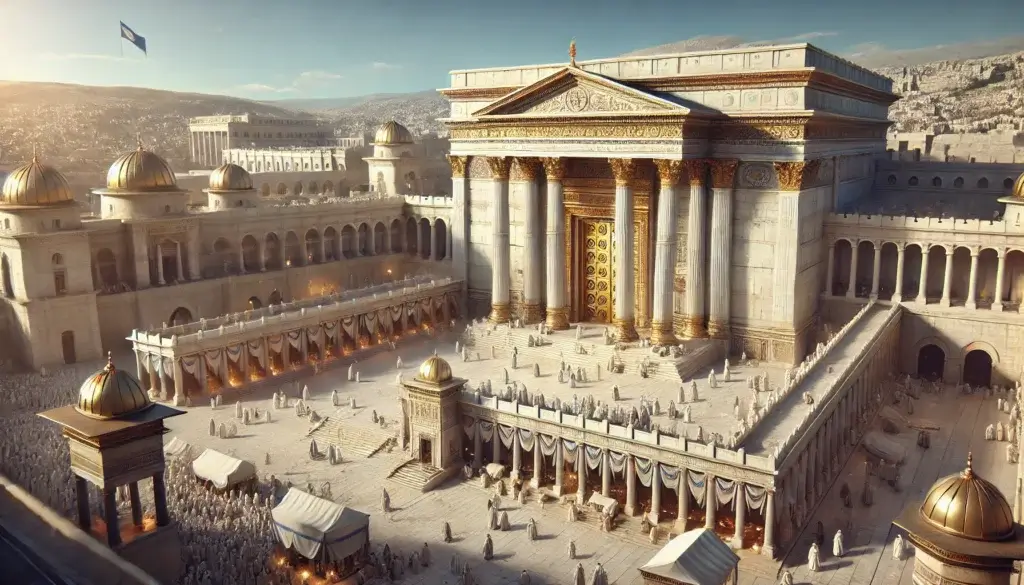
For many, a future Jewish temple is central to their understanding of Bible prophecy. They rightly recognize that Israel’s rebirth was necessary for the fulfilment of end-time prophecies. By the same logic, the temple must also be rebuilt, as passages in Daniel, Matthew, and Revelation appear to require it.

What if these prophecies have been misinterpreted? Daniel, though familiar with the concepts of the abomination of desolation and the removal of the daily sacrifice, admitted he didn’t understand their meaning:

“I heard, but I understood not: then said I, O my Lord, what shall be the end of these things?
And he said, Go thy way, Daniel: for the words are closed up and sealed till the time of the end.” (Dan. 12:8–9 KJV)

If today’s interpreters use the same method that left Daniel confused, the meaning remains sealed. Viewing the “abomination of desolation” and “daily sacrifice” as an idolatrous image and temple sacrifice leaves the true meaning just as hidden today as it was for Daniel.

If the phrases “abomination of desolation” and “daily sacrifice” are to be understood in the context of the end times, what might they signify? The Holy Spirit provides a significant clue in the Gospel of Matthew:

“Therefore when you see the ‘abomination of desolation,’ spoken of by Daniel the prophet, standing in the holy place” (whoever reads, let him understand) (Matt. 24:15, NKJV).

For Daniel, the phrase “abomination of desolation standing in the holy place” likely referred to an image or idol set up in the Temple. However, since the meaning was said to be “closed up and sealed” until the end times, the Holy Spirit encourages discernment. In the end time, we are called to seek a situation or event to which these words could apply, something relevant to the end time.

Under the Old Covenant, the τπος γιος (holy place) was primarily the physical temple as it was the locus of God’s presence. However, in the New Covenant God’s presence is in the Church:

“Do you not know that you are the temple of God and that the Spirit of God dwells in you?” (1 Corinthians 3:16, NKJV).

Both Paul and Peter transfer Temple imagery, its priesthood and the Daily Sacrifice to the church. The Church is the Temple of God (1 Cor. 3:16-17; 6:19; 2 Cor. 6:16; Eph. 2:21), its members are Temple priests (1 Pet. 2:5). Christians offer up “the Daily Sacrifice” (1 Pet. 2:5; Rom. 12:1; Lk. 9:23; Heb. 13:15).

Therefore, the “abomination of desolation” would be the Antichrist “Man of Sin Son of Perdition” standing up in the Church claiming to be God:

Let no one deceive you by any means; for that Day will not come unless the falling away comes first, and the man of sin is revealed, the son of perdition, who opposes and exalts himself above all that is called God or that is worshiped, so that he sits as God in the temple of God, showing himself that he is God. (2 Thess. 2:3-4 NKJ)

And when the “fallen away” church accepts his claim, it removes the daily sacrifice of taking up the cross for the real Jesus Christ.

In the NT the apostle Paul never calls the Christ rejecting Temple in Jerusalem the “Temple of God?” because God’s presence left during Christ’s crucifixion (Matt. 27:51) and then resided only in the Church.

In similar fashion, the “sacrifice ( זֶבַח zebach) and offering ( מִנְחָה minchah)” the Prince ends after 3.5 years in Daniel 9:27 are not “the Daily ( תָּמִיד tamiyd) offered by the Jews, but those given worldwide to “all that is called God” (2 Thess. 2:4). The  Antichrist breaks his covenant with all  the religious people of the world when he demands everyone worship him.

So also Revelation 11:1, the Church of God is the Temple being measured, the wheat at the altar are true worshippers and their being measured is symbolic of divine protection away from the tares trampling the courtyard outside of God’s presence:

Then I was given a reed like a measuring rod. And the angel stood, saying, “Rise and measure the temple of God, the altar, and those who worship there. “But leave out the court which is outside the temple, and do not measure it, for it has been given to the Gentiles. And they will tread the holy city underfoot for forty-two months. (Rev. 11:1-2 NKJ)

The Temple’s desolation remains permanent until Israel acknowledges Christ. In Matthew 24, Jesus links the Temple’s destruction to end-time events, continuing until the sign of His coming:

“Then Jesus went out and departed from the temple, and His disciples came up to show Him the buildings of the temple. And Jesus said to them, ‘Do you not see all these things? Assuredly, I say to you, not one stone shall be left here upon another, that shall not be thrown down.’ Now as He sat on the Mount of Olives, the disciples came to Him privately, saying, ‘Tell us, when will these things be? And what will be the sign of Your coming, and of the end of the age?’” (Matt. 24:1–3 NKJ)

God destroyed the Temple because Israel rejected Christ. Allowing another temple to be rebuilt before Israel accepts Him would contradict that message.

Therefore, all waiting for a future Temple in Jerusalem as a sign of the end should reconsider. If the building of a Temple does begin, it won’t have any real connection to Bible prophecy and therefore would signify nothing.


The Desolator is the Abomination of Desolation who stands up in the Church



The Desolator is the Abomination of Desolation who stands up in the Church

“Therefore when you see the`abomination of desolation,’ spoken of by Daniel the prophet, standing in the holy place ” (whoever reads, let him understand), (Matt. 24:15 NKJ)

Normally “holy place” would refer to the Temple area, that’s how Daniel would have understood it (Dan. 11:31). But Christ is speaking about a future event, and Daniel didn’t understand the prophecy as it applied to the end times because the words were “sealed”:

7 Then I heard the man clothed in linen, who was above the waters of the river, when he held up his right hand and his left hand to heaven, and swore by Him who lives forever, that it shall be for a time, times, and half a time; and when the power of the holy people has been completely shattered, all these things shall be finished.
8 Although I heard, I did not understand. Then I said, “My lord, what shall be the end of these things?”
9 And he said, “Go your way, Daniel, for the words are closed up and sealed till the time of the end. (Dan. 12:7-9 NKJ)

The natural reason for words that describe the end time to be sealed is because they refer to different things in the end time. Christ’s sacrifice changed everything, the Temple of God became the Church. If Daniel had a vision of a NT church while hearing the words, he would be totally confused. To him the words were “sealed”.

Notice the Holy Spirit cautions the reader right after the words “holy place”, “let him understand.” We in the End Time are to understand the “Holy Place” is NOT the literal temple, its the new place where God’s Spirit indwells, the Church.

Therefore, the following is sound:

  1. Redefinition of the Holy Place in the New Testament

Under the Old Covenant, the τόπος ἅγιος (holy place) was primarily associated with the physical temple in Jerusalem, the locus of God’s presence. However, the New Testament frequently redefines “holy” spaces and practices in spiritual terms:

  • Believers as God’s Temple:
    • “Do you not know that you are the temple of God and that the Spirit of God dwells in you?” (1 Corinthians 3:16, NKJV).
    • “You also, as living stones, are being built up a spiritual house, a holy priesthood, to offer up spiritual sacrifices acceptable to God through Jesus Christ.”(1 Peter 2:5, NKJV).
      • The shift from physical temple to spiritual community means that references to holy places can now be applied to the gathered Church, which is where God’s Spirit dwells.
  • Jesus’ Redefinition of Worship:
    • “The hour is coming when you will neither on this mountain, nor in Jerusalem, worship the Father… God is Spirit, and those who worship Him must worship in spirit and truth.”(John 4:21, 24, NKJV).
      • Jesus eliminates the necessity of physical locations like the temple, further supporting a spiritual understanding of the holy place.
  1. Matthew’s Use of Symbolism

Matthew often employs symbols and typological language to connect the Old Testament with its fulfillment in Christ and His Church:

  • The Abomination of Desolation in Daniel:
    • In Daniel 9:27, 11:31, and 12:11, the abomination refers to sacrilegious acts desecrating sacred spaces. Historically, this included Antiochus IV Epiphanes’ desecration of the temple. However, in Matthew 24:15, Jesus points forward to events beyond the physical temple, as evidenced by His broader eschatological discourse.
    • Matthew 24 addresses the end times, suggesting that the “holy place” could symbolize the spiritual domain of God’s people, not merely a geographic location.
  1. Paul’s Parallel in 2 Thessalonians 2

Paul’s discussion of the “man of sin” provides a framework for interpreting Matthew 24:15:

  • “Let no one deceive you by any means; for that Day will not come unless the falling away comes first, and the man of sin is revealed, the son of perdition, who opposes and exalts himself above all that is called God or that is worshiped, so that he sits as God in the temple of God, showing himself that he is God.”(2 Thessalonians 2:3-4, NKJV).
    • Paul refers to the “temple of God,” but in the New Testament, this phrase often denotes the Church rather than a physical temple. For example:
      • “For the temple of God is holy, which temple you are.” (1 Corinthians 3:17, NKJV).
    • The “man of sin” sitting in the temple symbolizes a spiritual corruption or apostasy within the Church, aligning with the broader New Testament theology.
  1. The Church as the Covenant Community

In the New Covenant, the Church replaces the physical temple as the locus of God’s presence:

  • “You are no longer strangers and foreigners, but fellow citizens with the saints and members of the household of God, having been built on the foundation of the apostles and prophets, Jesus Christ Himself being the chief cornerstone, in whom the whole building, being fitted together, grows into a holy temple in the Lord.” (Ephesians 2:19-21, NKJV).
  • This new identity of the Church as God’s holy temple suggests that references to the “holy place” may also apply to the collective body of believers.
  1. Spiritual Desecration in the Church

The concept of the abomination standing in the holy place is consistent with warnings about apostasy and corruption within the Church:

  • “For false Christs and false prophets will rise and show great signs and wonders to deceive, if possible, even the elect.”(Matthew 24:24, NKJV).
    • Spiritual defilement occurs when false teachings and leaders usurp the authority of Christ within the Church, metaphorically standing in the “holy place.”
  • This aligns with warnings in Revelation about the infiltration of evil within the community of believers (Revelation 13:6-8).
  1. Historical and Eschatological Applications

While Matthew 24:15 may have had a historical fulfillment in events like the destruction of the Jerusalem temple in A.D. 70, its eschatological dimension points to broader spiritual realities:

  • Just as the temple represented God’s presence in the Old Covenant, the Church represents His presence in the New Covenant. Thus, desecration of the “holy place” refers to the spiritual corruption of God’s people, consistent with the broader New Testament understanding.

Conclusion

The phrase τόπἁγίῳ in Matthew 24:15 can refer to the Church, understood as the spiritual temple of God under the New Covenant. This interpretation is supported by:

  1. The New Testament’s redefinition of holy places.
  2. Matthew’s use of symbolic language.
  3. Paul’s parallel reference to the “temple of God” in 2 Thessalonians 2.
  4. The Church’s identity as the locus of God’s presence.

This perspective shifts the focus from a physical temple to the spiritual community of believers, emphasizing the New Covenant’s theological framework.


The End Times Unfold: The Four Horsemen, the Antichrist, and Satan’s Deception

four horsemen of the apocalypse

The End Times Unfold: The Four Horsemen, the Antichrist, and Satan’s Deception

The Cosmic War: The Expulsion of Satan

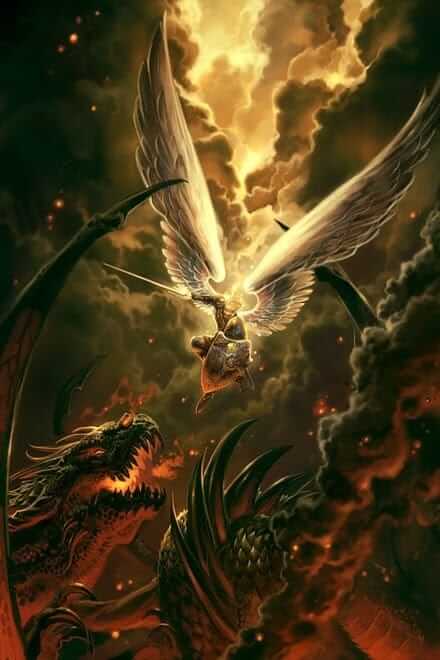
The narrative begins with a celestial battle described in Revelation 12:7-9. Michael and his angels clash with Satan and his forces, ultimately casting them out of heaven. Banished to the earth, Satan and his demons take on a deceptive guise, appearing in a fleet of dazzling UFOs, claiming to be extraterrestrial beings—the Elohim—returning to guide humanity.

This spectacle is a calculated move, fulfilling 2 Thessalonians 2:9, where the Antichrist’s coming is described as being “according to the working of Satan, with all power, signs, and lying wonders.” Humanity is enthralled as the so-called Elohim declare themselves humanity’s ancient creators. They anoint a charismatic leader—the “Man of Sin”—as their chosen liaison to the world.

The Falling Away and the Rise of the Man of Sin

Before the seven-year tribulation begins, a great apostasy spreads across the Church. Many abandon their faith, seeking miracles and signs instead of clinging to biblical truth. This is the “falling away” described in 2 Thessalonians 2:3. As spiritual discernment wanes, the Antichrist rises to prominence, masquerading as the savior of humanity.

The first seal is opened in Revelation 6:1-2, revealing a rider on a white horse. “He who sat on it had a bow; and a crown was given to him, and he went out conquering and to conquer.” This rider symbolizes the Antichrist, who, with the endorsement of the extraterrestrials, unites nations under a revived Greco-Roman Empire (Revelation 13:1-5). He promises peace and prosperity, but this facade is short-lived.

The Four Horsemen: Satan’s Agents of Chaos

With the Antichrist in position, Satan deploys his next strategy to secure global dominance. The opening of the seals in Revelation 6 unleashes the Four Horsemen, each bringing unprecedented suffering to humanity.

  1. The White Horse: Deception The Antichrist, under the guise of peace, spreads a strong delusion, convincing the world that he is the Christ (2 Thessalonians 2:11). By Satan’s power he performs signs and wonders replacing the truth of the Gospel with a counterfeit faith that is infused with ancient alien theory and with it conquers the world to believe the falsehood.
  2. The Red Horse: War The second seal is opened, releasing the red horse. Its rider brings war and strife, taking peace from the earth (Revelation 6:3-4). Conflicts erupt globally, fulfilling Christ’s warning: “You will hear of wars and rumors of wars” (Matthew 24:6-7).
  3. The Black Horse: Famine The third seal reveals the black horse, symbolizing famine and economic collapse (Revelation 6:5-6). The rider’s scales signify scarcity, as the cost of basic necessities skyrockets. This aligns with Jesus’ prophecy of famines during the end times (Matthew 24:7).
  4. The Pale Horse: Pestilence and Death The fourth horse, pale and menacing, spreads disease and death across the earth (Revelation 6:7-8). These calamities claim a quarter of the world’s population, intensifying humanity’s desperation.

The Global Surrender to the Antichrist

As chaos engulfs the earth, the nations turn to the Antichrist for salvation. Supported by the extraterrestrial Elohim, he proposes a unified world government to restore order. The nations eagerly comply, granting him dictatorial power over a global regime (Revelation 13:7). This government enforces the worship of the Antichrist and the Elohim, outlawing biblical faith.

The Antichrist’s reign introduces a new moral order, fulfilling Daniel 7:25, where he is prophesied to “change times and law.” Ancient alien theory becomes the new belief system, replacing the worship of Yehovah with veneration of the Antichrist as the ultimate hybrid—a divine-human being surpassing all gods.

The Revelation of the Son of Destruction

Midway through the seven-year tribulation, the Antichrist reveals his true identity. In the temple of God, he declares himself the “seed of Satan,” the prophesied “son of perdition” (2 Thessalonians 2:3-4). He denies the Father and the Son, fulfilling the description of the Antichrist in 1 John 2:18-22. Claiming to have evolved into a god above all gods, he blasphemes Yehovah and demands universal worship (Revelation 13:4-6).

The Final Apostasy and Blasphemy

The Antichrist’s regime intensifies its persecution of believers. He is aided by the extraterrestrial Elohim and Britain and America united under a False Prophet, who deceive the earth to build the quantum computing Network to manage the earth’s dwindling resources (Revelation 13:11-14). The Antichrist seeks to eradicate all vestiges of biblical truth, enforcing the worship of Satan and himself. This spiritual darkness fulfills 2 Thessalonians 2:11, where God allows a “strong delusion” to prevail, leading those who reject the truth to believe the lie.

The Gathering at Armageddon

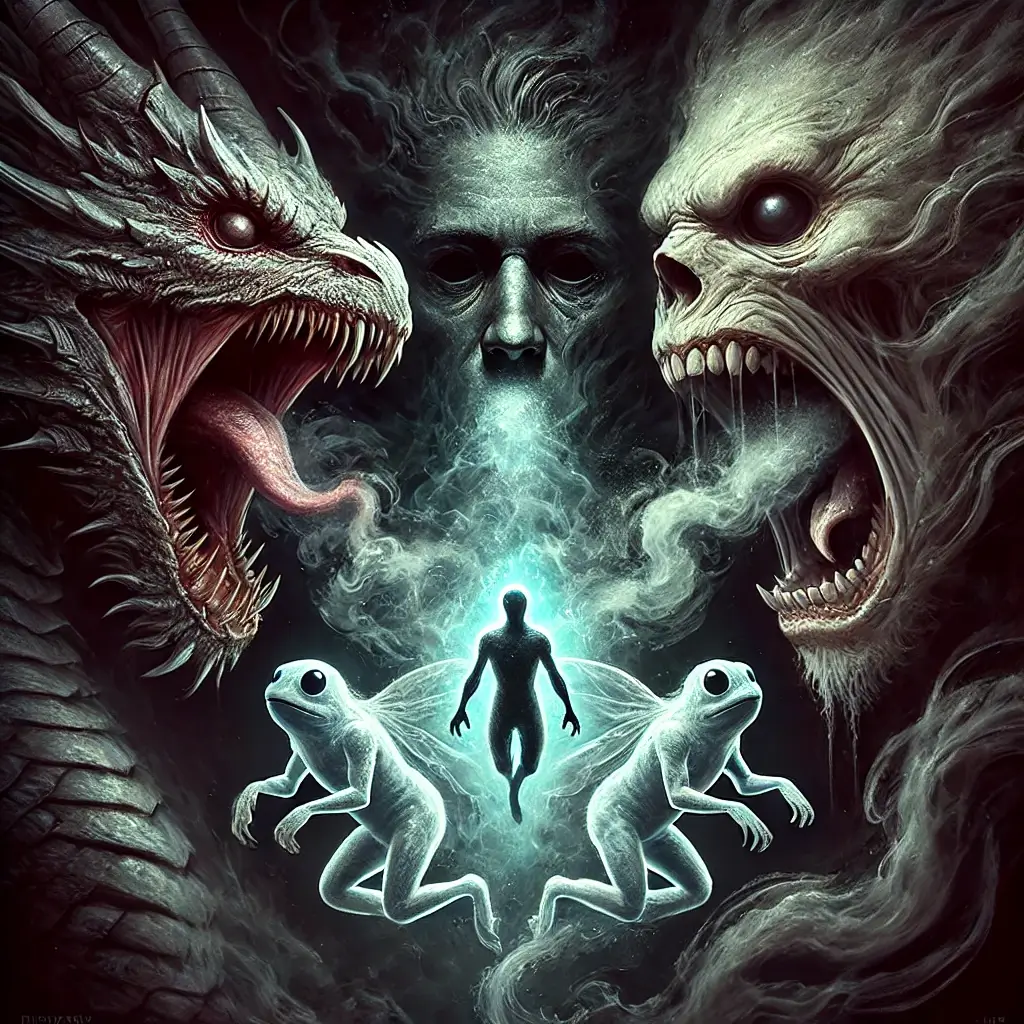
As the seven-year tribulation nears its conclusion, the Antichrist, the Dragon (Satan), and the False Prophet demon inspired delusion rallies the kings of the earth to war against God. Unclean spirits, described as frogs, go out to deceive the nations, gathering them for the final confrontation at Armageddon (Revelation 16:13-14). The stage is set for the ultimate battle between good and evil.

The Return of the True Christ

The climax of the story unfolds with the glorious return of Jesus Christ. Riding a white horse, He descends from heaven with the armies of God (Revelation 19:11-16). The Antichrist and his allies are defeated, and Satan is bound for a thousand years (Revelation 20:1-3). The false narrative of the Elohim is dismantled, and the eternal reign of Christ begins.

Conclusion: A Story of Warning and Hope

This tale of deception, chaos, and ultimate redemption underscores the dangers of abandoning God’s truth for lies. From the Antichrist’s rise to the devastation wrought by the Four Horsemen, Satan’s strategy reveals his ultimate goal: to usurp God’s authority and lead humanity astray. Yet, the victory of Christ is certain, offering hope to those who remain faithful.


End Times Timeline
Ancient Aliens or Angels? Even the Elect might be deceived
Nephilim Fallen Angels and the Sons of God
As in the days of Noe, so shall it be also in the days of the Son of man
The Antichrist: His Names Titles and Descriptions
What did the apostle John reveal when he said: “It is the last hour”?
Where Is The Judgment Of Fallen Angels?
Do Ancient Aliens Appear in the Bible?
The Coming False Christ and His Followers Revealed


And we know that all things work together for good to those who love God

how to be saved

28 And we know that all things work together for good to those who love God, to those who are the called according to His purpose.

29 For whom He foreknew, He also predestined to be conformed to the image of His Son, that He might be the firstborn among many brethren.

30 Moreover whom He predestined, these He also called; whom He called, these He also justified; and whom He justified, these He also glorified.

31 What then shall we say to these things? If God is for us, who can be against us? (Rom. 8:28-31 NKJ)

 Premises:

  1. Omniscience of God: God possesses complete and infinite knowledge of all possible realities and outcomes, encompassing every potential state of existence (“fallen” and “unfallen” realms).
  2. Distinct Act of Foreknowledge: While omniscience is God’s all-encompassing knowledge, foreknowledge is a specific application or aspect of His omniscience. In this act of foreknowledge, God identifies and recognizes those individuals who would willingly respond to His love and maintain a faithful relationship with Him upon “awakening” into existence in an unfallen state.
  3. Recognition of the Loving in the Unfallen Realm: God, in His foreknowledge, perceived which individuals would choose to love and remain committed to Him when they came into existence without the influence of a fallen nature.
  4. Election Based on Foreknowledge: God, having foreknown these individuals as loving Him in the unfallen realm, then elected this select group to be predestined for a specific purpose. This purpose is to be conformed to the image of His Son, thus initiating their eventual justification and glorification.
  5. Predestination Without Reprobation: God’s act of predestining those He foreknew does not imply reprobation for others. Those not foreknown as loving Him are simply not part of this predestination process, highlighting the absence of any active decision to reprobate them.
  6. Sequential Process of Salvation: Those whom God foreknew and elected are subsequently predestined to be conformed to Christ’s image, called by God, justified through faith, and ultimately glorified in His presence.

Logical Conclusion:

  • Foreknowledge and Predestination as Related but Separate Acts: God’s omniscience is a broad, comprehensive state, while His foreknowledge is a focused, deliberate recognition within omniscience, aimed at identifying those who would love Him. In a subsequent and distinct act, God predestines these individuals to follow a path that includes being called, justified, and glorified, ensuring their full salvation.
  • Exclusion of Reprobation: The passage and the logic behind these premises imply that those not foreknown as loving God are absent from the predestination process. This underscores that reprobation is not part of the divine action described in Romans 8:28-30.

Summary:

God’s omniscience allowed Him to know all possible realities, including who would willingly return His love when they awoke into existence in an unfallen state. This knowledge formed the basis for His act of foreknowledge, wherein He selected those individuals who loved Him and predestined them to be conformed to the image of His Son, ensuring their salvation journey through calling, justification, and glorification. The absence of those not foreknown indicates that God’s predestination does not include or imply reprobation.


Sherlock Holmes Unveils the mystery of the Fall of Satan


Satan, once a high-ranking and powerful angel, led a rebellion against God and now commands the demonic forces in their opposition to divine purposes. Scripture identifies him with various titles: “Satan” (meaning “adversary”), “the devil,” “the serpent,” “the great dragon,” “the prince of the power of the air,” “the god of this age,” “the evil one,” “the prince of demons,” “the accuser,” and “the tempter” (e.g., Eph 2:2; Rev 12:9; Matt 4:1; Gen 3:1; 2 Cor 4:4).

Although Genesis does not explicitly name Satan as the serpent that tempted Eve, later scriptures, such as Revelation 12:9, confirm this identity. Satan’s initial rebellion, driven by pride in his own beauty and a corrupted wisdom, led him to seek worship for himself (Ez 28:14-17; Isa 14:13-15). As the “anointed cherub,” Satan held a unique and exalted position among the heavenly beings, acting as a canopy over God’s throne. His power exceeded even that of the Archangel Michael (Dan 10:13; Jude 1:9).

Satan’s fall stemmed from an inward discovery of iniquity, prompting him to challenge God’s very criteria for divine rule. This rebellion was not just an act of pride but a philosophical assault on God’s nature. He reasoned that God’s belief in the capacity of intelligent beings to reciprocate true, unselfish love was a fundamental error. This conclusion, influenced by Satan’s own confirmation bias, led him to propagate the idea that all devotion to God must be rooted in selfish motives. With this argument, he convinced a third of the angels to join his rebellion (Rev 12:4), spreading his deception through subtle persuasion (Ez 28:5).

The story of Job exemplifies Satan’s claim. Satan’s challenge before the heavenly court was that Job’s faithfulness stemmed only from God’s protection and blessings. When permitted to test Job (Job 1:6-12), Satan sought to prove that human devotion was inherently selfish. Yet, despite Job’s suffering, he did not curse God, disproving Satan’s assertion.

However, this defeat did not change the conviction held by Satan and the fallen angels. They believed that sentient beings ultimately served God out of self-interest. The true and irrefutable evidence came with the incarnation of Christ. Jesus demonstrated genuine, self-sacrificing love by relinquishing the privileges of divine status, becoming a servant, and willingly dying on the cross (Phil 2:4-11). This act, motivated solely by love for the Father and humanity, proved that unselfish love was not only possible but real.

The Father also displayed unselfish love by giving His only Son, the “apple of His eye,” so that humanity might have eternal life (Jn 3:16). Thus, the combined testimony of the Father and the Son conclusively established the existence of true, unselfish love. According to Deuteronomy 19:15, “By the mouth of two or three witnesses the matter shall be established,” and in this case, the divine witness was undeniable.

The incarnation of Christ had profound implications for Satan and his fallen angels. They could no longer claim that unselfish love was a myth. The very declaration, “Jesus Christ came in the flesh,” chokes demonic forces, as they are overwhelmed by the reality of their defeat and the terror of God’s truth (1 Jn 4:2-3).

In the end, Satan’s gamble—that God would disqualify Himself by erring in creating beings capable of mutual, true love—proved catastrophic. The proof of God’s love and the sacrifice of Christ stand as the ultimate testament, silencing all opposition and establishing the foundation of divine justice and truth.


Sherlock Holmes unravels the mystery of the Antichrist


Sherlock Holmes sat in his Baker Street armchair, fingers steepled, eyes fixed intently on the flickering flame of the fireplace. The rhythmic tick of the clock and the distant clatter of hooves on cobblestones created a soothing backdrop as he contemplated a most curious theological puzzle that had captured his interest: the apparent contradiction of the “false Christ” who, as foretold, would deny the Father and the Son.

Dr. Watson, ever curious and keen to see Holmes’ agile mind at work, sat opposite, observing the detective’s contemplative silence. Finally, Holmes spoke, his voice low and measured.

“Watson, have you ever pondered how a being so antithetical to the essence of Christ could masquerade convincingly as the savior of mankind?”

Watson blinked, caught off guard. “The Antichrist, you mean? I must admit, Holmes, it’s a riddle theologians have long debated. A figure who denies the Father and Son, yet presents himself as Christ—it seems a contradiction.”

Holmes leaned forward, the fire casting shadows across the sharp angles of his face. “Precisely. The mind finds itself entangled in the very threads of this duality. I have traced the common solutions, yet they all fall short when subjected to rigorous scrutiny. Some speak of the Antichrist as mere metaphor, a symbol of ideological opposition, while others insist he is a literal being of deception. But none capture the entirety of the tale.”

He paused, letting the tension hang in the air before continuing. “Consider this, Watson: the solution is not in choosing between these interpretations but in understanding them as a sequence. The Antichrist does not only pose as a Christ-like figure; he begins as one.”

Watson’s brow furrowed. “Begins as one? How so?”

Holmes’s eyes shone with the glint of deduction. “Picture, if you will, a figure who emerges amidst chaos, speaking the language of peace and unity, upholding doctrine with a subtle twist—permitting sin under the guise of progress and understanding. For the first 3.5 years, he upholds the façade, appearing almost orthodox. But there is a turning point, Watson. A point at which he reveals his true nature as the ‘Son of Destruction,’ the prophesied seed of Satan.”

“The moment of revelation,” Watson muttered, piecing it together.

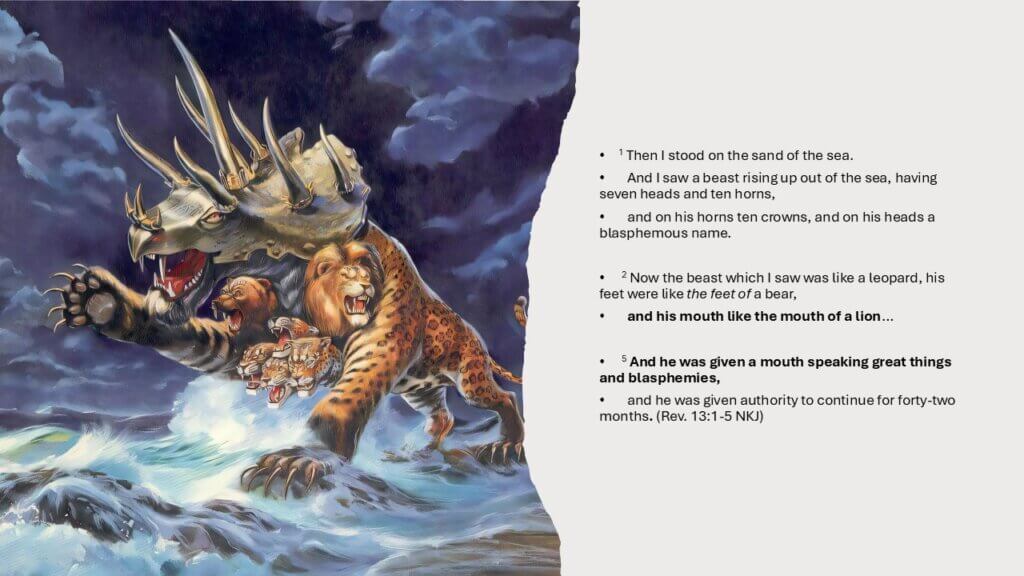
“Exactly,” Holmes said, his voice tinged with satisfaction. “It is then that the second mouth of the Beast comes into play—the blasphemous one. The first, lion-like mouth spoke with authority and allure, drawing the masses with its charisma. But when the time is ripe, the second mouth unleashes blasphemies against the heavens.”

Holmes’s gaze drifted to the small library behind Watson, where a worn Bible sat atop a pile of tomes. “In Daniel 9:27, we see the ‘prince’ who makes a covenant for one week but breaks it halfway through. The initial 3.5 years represent the period of deceptive compliance, a mask of benevolence and faith. Only then does the true face appear—destroying, desecrating, and declaring war on the very doctrines he once seemed to uphold.”

Watson leaned back, the realization dawning on him. “That explains why scholars have struggled to reconcile the contradiction. The Antichrist’s phases—first the ‘false Christ’ who seduces and the latter phase, the ‘Son of Destruction’—align perfectly with scripture and prophecy.”

Holmes allowed a rare smile to tug at the corner of his lips. “Indeed, Watson. That is why the Beast rising from the sea has two mouths. One that speaks like a lion, commanding attention and respect; the other that blasphemes, declaring open rebellion against the divine.”

The room fell silent again, the fire crackling as if in approval of Holmes’s deduction. The detective’s piercing eyes softened for a moment, reflecting the flame’s glow. “It is in understanding the subtleties, Watson, that we unravel the most confounding mysteries. Even those that reach beyond the veil of mere earthly concerns.”

Watson nodded, admiration gleaming in his eyes. “As always, Holmes, you make the unfathomable seem almost elementary.”


Sherlock Holmes Deciphers Biblical Prophecy Revelation 13:1-3

Ah, Watson, let us approach this puzzle with the same keen eye with which we might unravel a case of grand conspiracy and layered intrigue. Picture, if you will, the grand narrative spun by the Apostle John in Revelation 13:1-3, laden with symbols that draw heavily from Daniel’s visions. The passage begins with John standing upon the sands of the sea, evoking Daniel’s vision by the “great sea” where beasts emerged one by one. Yet, John’s perspective is unique, a panoramic view from the end times where the culmination of these beasts—their shared legacy—manifests as a singular, composite entity.


Let us first dissect the symbolism of these beasts as kingdoms, as Daniel himself interpreted. In his vision, the succession began with Nebuchadnezzar’s Babylon, followed by the Medo-Persian Empire, then the Grecian Empire with its four-headed beast, and finally the formidable Roman Empire. John’s account, however, casts a wider net, encompassing all empires that influenced Israel, starting from ancient Babylon and tracing through to the “one is” of his own day—the Roman Empire. Notably, John also includes Britain, whose fleeting dominion over Palestine secured its place as the seventh head. The British Empire’s contribution, symbolized by its brief mandate and the pivotal Balfour Declaration, paved the way for modern Israel’s existence, lending profound significance to its role.


Now, Watson, observe the enigma of the eighth beast, “one of the seven,” yet distinct and standing apart as an “eighth.” This final empire is a rebirth of the Grecian-Roman lineage, but with deeper roots in ancient Babylon—the city whose ambitious tower epitomized rebellion against the divine (Genesis 11:1-9). In this revived Roman-Babylonian amalgam, John’s beast embodies the culmination of power, ascending from the abyss with dark energy fueled by Satanic influence and the whispered lore of fallen angelic technology (2 Thess. 2:9; Daniel 9:27). The beast’s splendor is deceptive, inspiring awe and false worship among the masses as it parades its seemingly invincible might (Revelation 13:3-4).


This mortally wounded head—ancient Babylon itself—“was and is not,” submerged under the sands until its resurrection as the capital of this new empire. When it falls once more, by the might of a coalition from the north—Russia, Iran, and Turkey—its destruction marks both judgment and a significant wound to the beast (Jeremiah 50:3, 13, 39-40; 51:29; Revelation 18:2-10). The question of whether this demise unfolds through nuclear fire or some divine cataclysm remains unanswered, yet the symbolism implies a cataclysm of immense scale.


The nuanced interpretations of the “mortal wound” in Revelation 13:3 and the “deadly wound” healed in Revelation 13:12 require careful separation. The first, a fatal blow to Babylon, signals the end of its dominance, while the second, a sword stroke, weakens but does not kill—indicating the empire’s survival amid turmoil. These distinct references serve to illustrate Babylon’s cyclical fate: once slain and buried, now resurrected to usher in the end-time rebellion, only to face ultimate destruction under divine judgment (Jeremiah 51:63-64; Isaiah 13:19-22).


Turning our gaze to the ten horns, we recognize them as ten kings who rise with the Assyrian King of the North—Adonikam, the Antichrist, and final ruler of this empire (Daniel 7:7-10, 23-27; 8:9-14; Revelation 17:12-13). With Babylon’s fall, the empire reels, plunging the world into a depression described in Revelation 18:11-19. Yet, from the turmoil, Britain and America emerge—embodiments of the beast with two lamb-like horns. Their strength prompts adversaries such as Russia to pause. These nations, Watson, equipped with secretive technologies gleaned from supposed extraterrestrial encounters, represent the pinnacle of deception and power. The notion that advanced crafts could be felled by lightning—a clever fabrication indeed—masks the true origin of such devices: a legacy of Satan’s cunning, distributed subtly over decades.


With their technological might, these nations harness the first quantum computing AI, linking the world into a network that enforces the “666 Mark economy,” a membership economy under total surveillance and control (Revelation 13:13-17). The leaders of once-Christian nations, now speaking like dragons, support the Antichrist’s iron-fisted rule. Economic sanctions, symbolic of cutting off the lifeblood of any nonconforming nation, align with this prophecy, enforcing compliance under the most severe threat.


So, Watson, we see before us a web of interconnected symbols—each head, horn, and wound a clue that pieces together a grand and terrible tapestry. The revived Roman-Babylonian empire, underpinned by Satanic power, rises with the ambition of ancient Babel, only to meet its foretold end under divine retribution.

That is how we solve the mystery of the Beast having seven heads and ten horns that John saw rising up out of the sea in Revelation 13:1-3

1 And I stood upon the sand of the sea, and saw a beast rise up out of the sea, having seven heads and ten horns, and upon his horns ten crowns, and upon his heads the name of blasphemy.

2 And the beast which I saw was like unto a leopard, and his feet were as the feet of a bear, and his mouth as the mouth of a lion: and the dragon gave him his power, and his seat, and great authority.

3 And I saw one of his heads as it were wounded to death; and his deadly wound was healed: and all the world wondered after the beast. (Rev. 13:1-3 KJV)


The Name 666 Reveals

Abstract

This paper explores the interpretation of “the number of the beast,” 666, as presented in the Book of Revelation 13:18, proposing that the name “Adonikam” uniquely aligns with the riddle. By examining the text through the lens of Janus Parallelism, an ancient Hebrew literary technique, the analysis suggests that John’s use of 666 was deliberately intended to evoke the only Old Testament name associated with this number: Adonikam. This study critiques the Gematria approach as insufficient due to its broad interpretative range, advocating instead for a textual analysis rooted in scriptural references and Hebrew linguistics. Additionally, it draws upon the scholarly work of Cyrus Gordon and E. W. Hengstenberg, who argue that the parallelism in Revelation serves to reinforce Adonikam’s symbolic alignment with the beast, marking him as a figure of power and blasphemy that challenges divine authority.


Introduction

The biblical text Revelation 13:18 provides one of the most enigmatic clues in religious literature: “Here is wisdom. Let him that hath understanding count the number of the beast: for it is the number of a man; and his number is Six hundred threescore and six.” This has led scholars and interpreters alike to speculate on the identity symbolized by the number 666. The hypothesis that the name “Adonikam,” a biblical figure associated with 666 in the Old Testament (Ezra 2:13), could be the intended solution is a compelling one that contrasts with traditional interpretations reliant on Gematria. Instead, this study leverages a linguistic framework rooted in ancient Hebrew parallelism, particularly Janus Parallelism, to decode the meaning behind 666.


The Limitations of Gematria in Deciphering 666

Gematria, the practice of assigning numerical values to letters, is often used to derive names from numbers, but it encounters several challenges in this context. While Gematria can yield many names corresponding to 666, it lacks precision and leads to an overabundance of possible answers. This proliferation dilutes the specificity required by the text, as the riddle is intended to yield one definitive name. Furthermore, no scriptural precedent exists for applying Gematria to theological riddles, making its relevance here questionable. As such, this analysis dismisses Gematria in favor of examining the text and its numbers in the context of Hebrew literary structures.


Understanding Janus Parallelism

Janus Parallelism is an ancient Hebrew literary device identified by Cyrus Gordon, in which a single term or phrase possesses dual meanings, linking both preceding and subsequent clauses. This dual perspective, akin to the Roman god Janus who faces two directions, allows the same phrase to serve multiple interpretative purposes. Several examples of Janus Parallelism appear in the Hebrew Bible (e.g., Genesis 6:3, Daniel 11:35), enhancing the depth of meaning and connecting disparate ideas through wordplay. In the case of 666, this parallelism appears in the way John invites readers to “count the number of the beast” while evoking the only biblical figure, Adonikam, directly associated with this number.

By applying Janus Parallelism, the riddle suggests two interpretations of 666: as a numeric identifier for Adonikam’s sons (666 in Ezra 2:13) and as an emblematic reference that points both backward and forward to the name Adonikam, suggesting him as the symbolic “beast.”


Scriptural and Linguistic Evidence Supporting Adonikam

  1. Scriptural Clues: Three textual clues in Revelation direct readers to Adonikam:
    • Calculate the Number: The act of counting or “calculating” could imply adding 1 to 666, which aligns with the textual discrepancy of Adonikam’s descendants in Ezra and Nehemiah (667 in Nehemiah 7:18).
    • Number OF a Man: The phrase suggests ownership, as the 666 sons are directly tied to Adonikam, the “man” associated with the number.
    • His Number is 666: This points to a singular figure with a unique association to 666, a characteristic only fulfilled by Adonikam.
  2. Janus Parallelism in Action: Interpreting “count the number” as a Janus parallelism, we observe 666 both as a historical reference (backward) to Adonikam’s descendants and as a prophetic symbol (forward) of the beast. The “count” or “calculate” serves as a bridge between Adonikam and the beast, marking Adonikam as a foreshadowed figure of blasphemy and opposition to God.
  3. Theological Resonance: The name Adonikam translates to “the Lord arises,” a phrase loaded with significance in Hebrew worship that takes on a sinister edge when applied to the beast. E. W. Hengstenberg argues that Adonikam’s name, associated with vengeance and divine authority, would be appropriated by the beast as an act of blasphemy, positioning himself in opposition to God. Revelation’s description of the beast mirrors Adonikam’s symbolic appropriation of divine titles, presenting himself as a figure of worship and warfare against the saints.

Implications for the Identification of the Beast

If Adonikam indeed symbolizes the beast, the implications are substantial for the interpretation of Revelation. Rather than seeking a future historical figure, the text would be pointing to a theological archetype, a name symbolizing the qualities of rebellion, self-exaltation, and ultimate opposition to God’s authority. Adonikam’s appropriation of the Lord’s title, paralleled in Revelation’s description of the beast, reinforces the idea that the beast is not merely an individual but a representation of the ultimate blasphemy and counterfeit divinity.


Conclusion

This analysis concludes that Adonikam, and not a future historical figure, may represent the riddle’s intended answer. Using Janus Parallelism, we uncover how Revelation 13:18 draws on the Old Testament’s numerical association with Adonikam’s sons, making the name Adonikam the sole contender for “the number of the beast.” This interpretation is supported by linguistic and theological analysis, underscoring Adonikam’s name as a symbol of blasphemous power. By understanding Adonikam as the beast, readers gain insight into the symbolic nature of 666, as a number that represents not a future dictator, but an ancient archetype of rebellion and self-exaltation.


References

  1. Berlin, A. (1992). Parallelism. In D. N. Freedman (Ed.), The Anchor Yale Bible Dictionary (Vol. 5, p. 157). New York: Doubleday.
  2. Hengstenberg, E. W. (1853). The Revelation of St. John. (P. Fairbairn, Trans.) (Vol. 2, pp. 69–71). New York: Robert Carter & Brothers.
  3. Holy Bible, King James Version. (1611).


What Happens Five Minutes After You Die? Hebrews 9:27 Has the Answer.

Scripture of Truth

it is appointed for men to die once, and after this, judgment

24 For Christ hasn’t entered into holy places made with hands, which are representations of the true, but into heaven itself, now to appear in the presence of God for us;
25 nor yet that he should offer himself often, as the high priest enters into the holy place year by year with blood not his own,
26 or else he must have suffered often since the foundation of the world. But now once at the end of the ages, he has been revealed to put away sin by the sacrifice of himself.
27 Inasmuch as it is appointed for men to die once, and after this, judgment,
28 so Christ also, having been offered once to bear the sins of many, will appear a second time, without sin, to those who are eagerly waiting for him for salvation. (Heb. 9:24-10:1 RPTE)

Hebrews 9:24–28 says Christ’s once for all, heavenly self offering is far superior to offerings under the Law of Moses as it was done only once to cover all sins in time and space. Its efficacy spans the whole sweep of human history (“since the foundation of the world,” v. 26; cp. “Lamb slain from the foundation of the world” Rev. 13:8); that the universal rule “it is appointed for humans to die once, and after this a trial (v. 27) will identify the “many” from all who die who thereafter “eagerly” wait “for Him for salvation” (v. 28).

Its tight death/judgment/second appearing parallel strongly support the claim that everyone unsaved born since the world’s foundation stands under the judgment of v. 27, and that the implied criterion is acceptance of the gospel preached to the dead (John 5:25; 1 Peter 3:18-22; 4:6) and this separates (“judges”) “the many” who now eagerly wait for Christ for salvation (v. 28), from those who do not.

This “trial/judgment” (κρίσις) is not “the Judgment” at the end of time, it lacks the definite article. It therefore is not neutral judgment with a formal outcome; it implies a formal trial setting involving a judge, plaintiff, and an advocate (1 John 2:1–2)

The author of Hebrews invokes the concept of what the early theologians referred to as “the particular judgment.” Its a divine trial, not merely a neutral evaluation of guilt or innocence. This is required by context as it moves from all experiencing this trial after death, to the “many” covered by Christ’s sacrifice, who become those “who eagerly wait for Him…for salvation” (Heb. 9:28) Not everyone who dies will see a positive result from a divine trial. Therefore, “those who eagerly wait for Him…for salvation” implies these saw a positive outcome, unlike those not among “the many” not covered by Christ’s sacrifice. Jesus excluded who believe in Him in while alive, they “pass from death into life” before they die, from any after death krisis judgment (John 5:24; 11:26; cp. Luke 23:43; 2 Cor. 5:8; Phil. 1:23).

Therefore, this text teaches that the opportunity for salvation is universal, not bound by time or space. The existence of those who received a positive outcome from this after death trial/judgment prove the infinite sacrifice of God’s only begotten Son extended the opportunity for salvation to the entire universe kosmos (John 3:16) of man’s habitation, which includes the dead in Hades.

Notes

κρίσις (krisis). n. fem. judgment, legal case. Refers to the process, event, or result of legal proceedings intended to evaluate punishment. This noun occurs 47 times in the NT and refers to the process or event of judgment. The noun can refer to a “trial” for a crime in human history (Matt 5:21–22). It can also refer to the evidence brought forth within a trial (John 3:19). It can refer to the positive resulting state after judgment, i.e., “justice” (Matt 12:18–20). -Garrett, J. K. (2014). Justice. In D. Mangum, D. R. Brown, R. Klippenstein, & R. Hurst (Eds.), Lexham Theological Wordbook. Lexham Press.


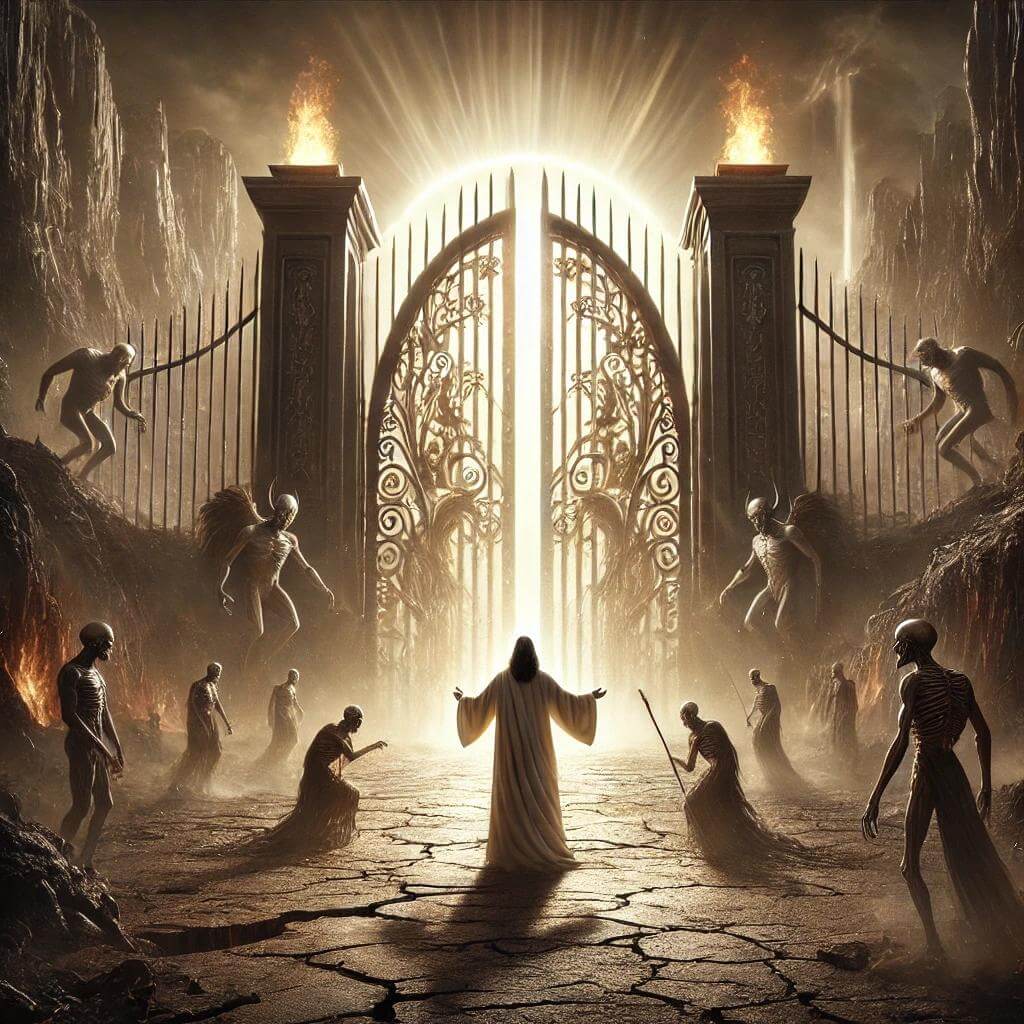
The Gates of Hell could not stop Jesus from preaching eternal life

Do not marvel at this; for the hour is coming in which all who are in the graves will hear His voice (Jn. 5:28 NKJ)

I’m not a story teller, but this is a great story. So I had ChatGPT write it. Its great, better than I can do:

Imagine the scene: Jesus, the Messiah, stands before the scribes and Pharisees, who are plotting His death. They believe that if they can just silence His voice—if they can put Him to death—they will stop His message, prevent Him from gaining followers, and protect their own influence. Yet Jesus speaks with confidence and authority, declaring something that must have left His enemies stunned. He tells them not to marvel, for the day is coming when even those in their graves will hear His voice.

Jesus knew they were seeking to kill Him because He healed on the Sabbath and called God His Father, making Himself equal with God (John 5:16-18). But in response, He didn’t back down. Instead, He boldly proclaimed His divine authority: *”As the Father raises the dead and gives them life, so also the Son gives life to whom He will” (John 5:21).* Jesus was not only claiming the power to heal the sick and raise the dead—He was claiming something far greater. He was declaring that even after death, His voice would not be silenced.

This is where the heart of Christ’s “boast” comes to light. The Pharisees could plot, and they could carry out their plans to crucify Him. They could stop His earthly ministry, but they could not stop His mission. Even after His death, Jesus would continue to preach, not to the living, but to the dead. This is what He foretold when He said, *“Do not marvel at this, for the hour is coming when all who are in the graves will hear His voice” (John 5:28).*

The message of eternal life was unstoppable. Even after Jesus was laid in the tomb, His voice would be heard by those who had already passed from this life. Scripture reveals that during the three days He was in the grave, He descended into the depths, to the “spirits in prison,” and preached to them (1 Peter 3:19). These were the dead who had never had the chance to hear His message of salvation during their earthly lives. Yet, through His death and resurrection, Jesus was extending the reach of His gospel beyond the boundaries of the living.

The apostle Peter confirms this when he writes, *“For this reason the gospel was preached also to those who are dead, that they might live according to God in the spirit” (1 Peter 4:6).* Even in death, the message of life persisted, reaching the souls in the grave, offering them a chance to hear and believe.

This fulfills Jesus’ promise that His authority was not confined to the living alone. He had the power to give life to whomever He willed—those who were physically alive and those who were already dead. The Pharisees thought that death would be the end of Him, but in fact, His mission would only intensify. As Ephesians says, *“He who descended is also the One who ascended far above all the heavens, that He might fill all things” (Ephesians 4:9-10).* Christ’s descent into the grave was not a defeat—it was part of His victory over death itself.

Jesus’ declaration that all in the graves would hear His voice speaks to the grand scope of His redemptive work. As the Father has life in Himself, He gave the Son the power to bring life, even from the depths of the grave. This is not merely about the final judgment, as some commentators suggest. It is about the work Christ accomplished in the grave during the three days of His death, preaching life even to the dead.

The boast of Christ is clear: Death could not silence Him. The Pharisees could not prevent Him from fulfilling His mission. Even when they thought they had won by crucifying Him, Jesus would go on to preach to the dead, making them alive by His word. His victory over death was absolute, and the gates of hell would never prevail against Him.

Christ’s voice continues to call out, even beyond the grave, offering life to all who will hear Him. His message of eternal life is one that death cannot stop. As Jesus proclaimed in John 5, *“Most assuredly, I say to you, he who hears My word and believes in Him who sent Me has everlasting life, and shall not come into judgment, but has passed from death into life” (John 5:24).* This promise of life is offered to all—both the living and the dead—because Christ’s power and authority know no limits.

This is the good news that Christians hold onto: The power of Jesus’ voice, the life He offers, extends beyond this life and into eternity. Death could not hold Him, and it cannot hold those who believe in Him. He is the resurrection and the life, and His voice will be heard by all, even those in the graves, as He leads His people from death to life everlasting.